6. Les Eyzies-de-Tayac-Sireuil, Nouvelle-Aquitaine
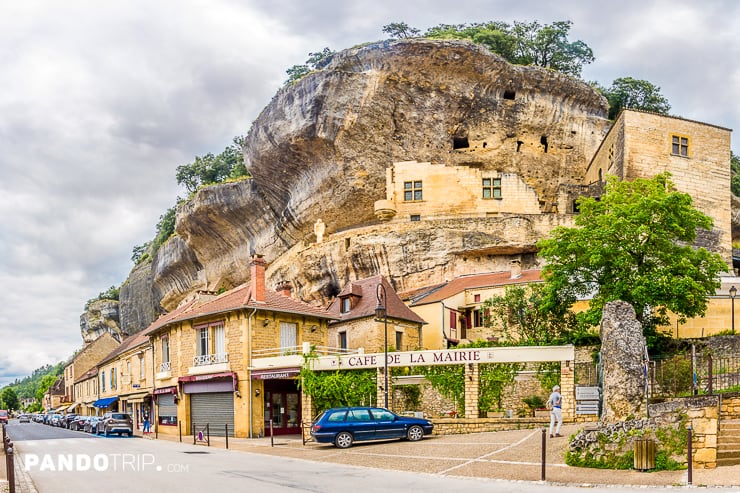
Les Eyzies-de-Tayac-Sireuil, or Les Eyzies, is a small village with less than 1000 inhabitants located southwestern France. It is known as the world capital of prehistory due to the numerous prehistoric sites found there, many of which are listed as UNESCO World Heritage Sites.
The most famous of these is probably the Cro-Magnon shelter (Abri Cro-Magnon). In this site first early modern humans were discovered, dated to about 30,000 years ago. The discoveries made in Cro-Magnon marked a milestone in global Prehistory studies and has significantly contributed to the village’s reputation as a center of prehistoric culture.
Another notable site in the vicinity is the Font-de-Gaume Cave, one of the few sites in France with polychrome cave paintings of animals dating back to the Magdalenian period. Nearby, the Les Combarelles is another cave with engravings of animals and human figures from the Upper Paleolithic.
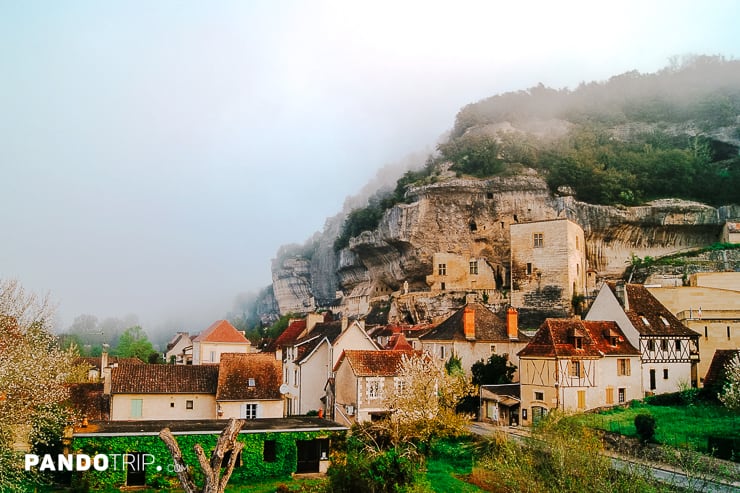
The village itself is nestled in a striking landscape, with steep cliffs providing a dramatic backdrop to the charming collection of houses. The cliff buildings in Les Eyzies-de-Tayac-Sireuil are one of the most remarkable features of the village. They are dwellings carved into the limestone cliffs along the Vézère river, some of which are still inhabited today. One of the most impressive cliff buildings is the Château de Tayac, a castle that was built in the 13th century and modified in the 16th and 17th centuries. It houses part of the collections of the National Museum of Prehistory.
7. Espelette, Nouvelle-Aquitaine

Each region of France has its own unique architectural style, but none are as distinctive as that of the Basque region. If you want to experience the Basque Country of France, there’s no better place than Espelette. The village is a blend of unique culinary traditions, historical charm, and Basque cultural heritage.
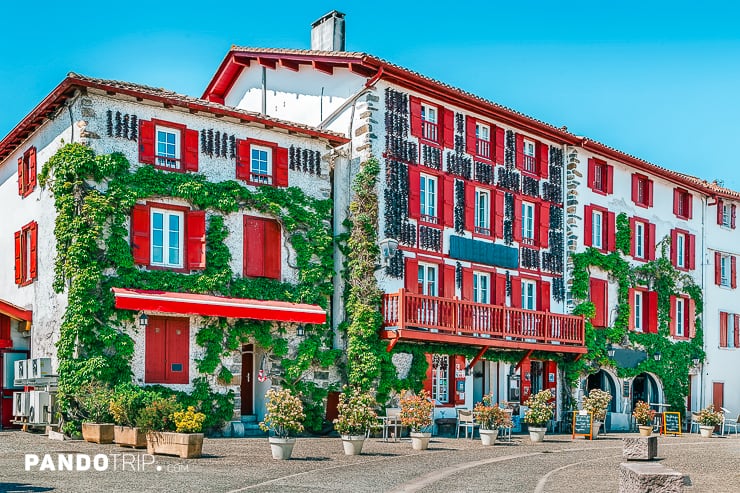
Espelette is best known for its production of the red peppers known as Piment d’Espelette. At times, it seems that the whole village is dedicated to these peppers. From the end of summer, thousands of peppers hang to dry on the facades of the traditional wooden houses. Most of the houses in the village are built in the typical Basque style, featuring white structures with red shutters. You will find several villages in this style in the Basque Country, but almost none elsewhere in France.
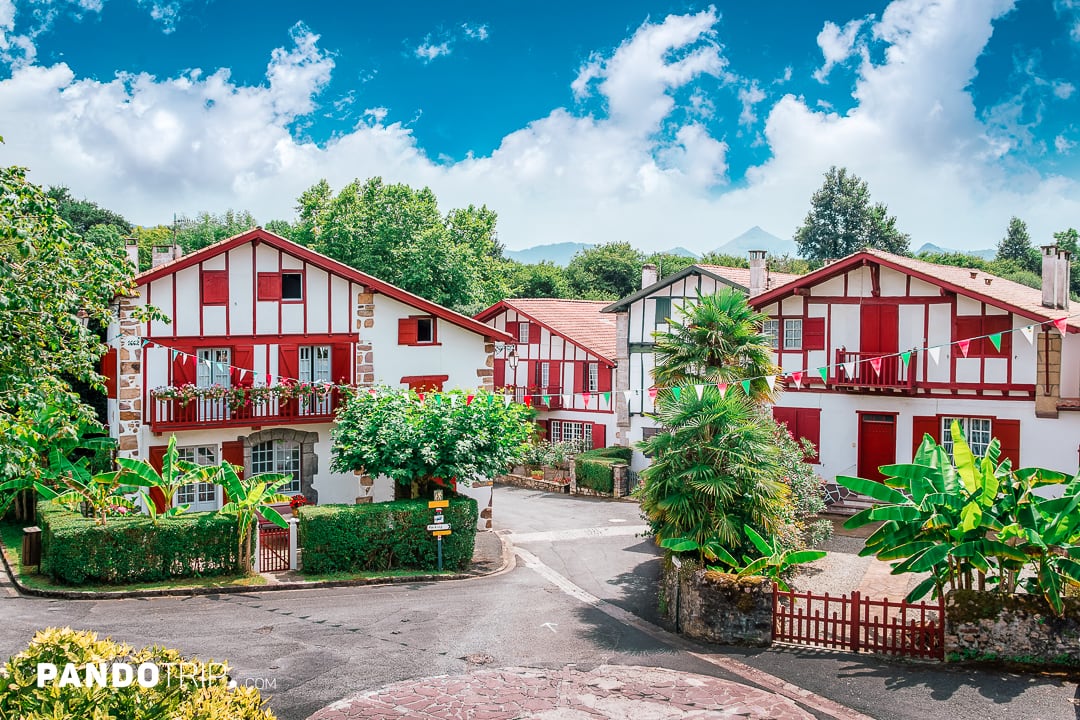
Apart from the famous peppers, Espelette is also home to the Church of Saint-Étienne. The church has a traditional Basque interior with three levels of wooden galleries surrounding the walls and a highly decorative 18th-century altarpiece. The nearby Chateau des Barons d’Ezpeleta was built in the municipality around the year 1000 by the lords of the Ezpeleta family. Today, the castle houses the town hall, among other facilities.
8. Eguisheim, Grand Est
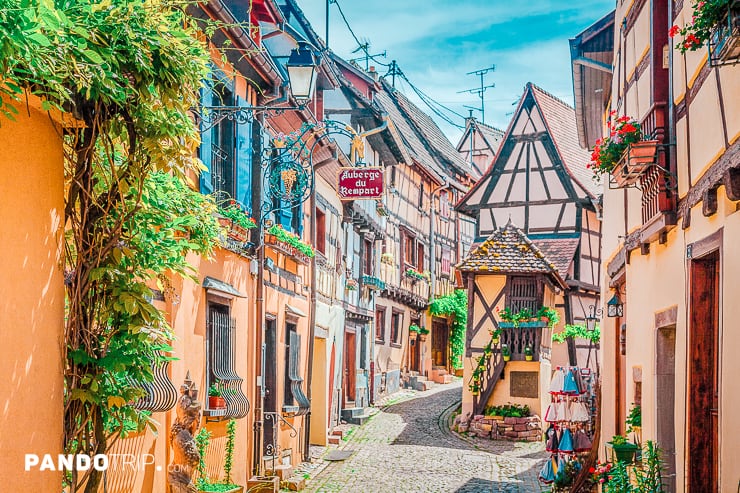
Located in the northeast of France, Egoities is one of the most picturesque villages in the country. It is situated on the famous Alsace Wine Route, merely a 10-15 minute drive from Colmar. The area around Eguisheim boasts some of the oldest settlements in Alsace, with traces of Celtic-Roman and Neolithic presence. The village itself dates back to the 13th century.
One of the most distinctive features of Eguisheim is its concentric layout. Streets are arranged in circular patterns around the village center, a unique configuration dating back to the Middle Ages. It is indeed a pleasure to stroll through the narrow, cobbled streets lined with beautiful old wooden houses, with their windows and balconies adorned with geraniums.
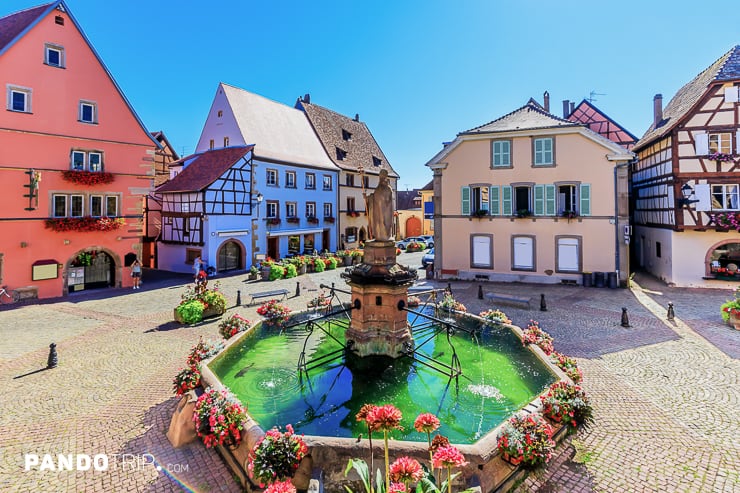
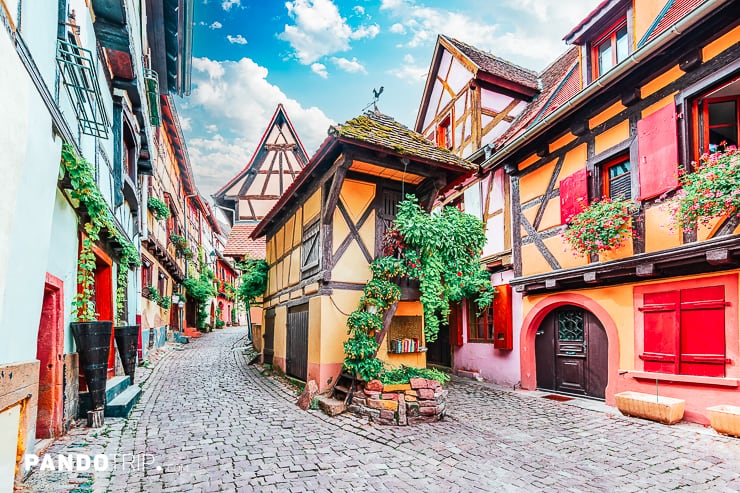
Throughout the village’s history, viticulture and the wine trade have always been its most significant economic activities. Today, Eguisheim remains a romantic wine village, home to numerous winegrowers and two of the region’s best wines, Eichberg and Pfersigberg.
9. Honfleur, Normandy
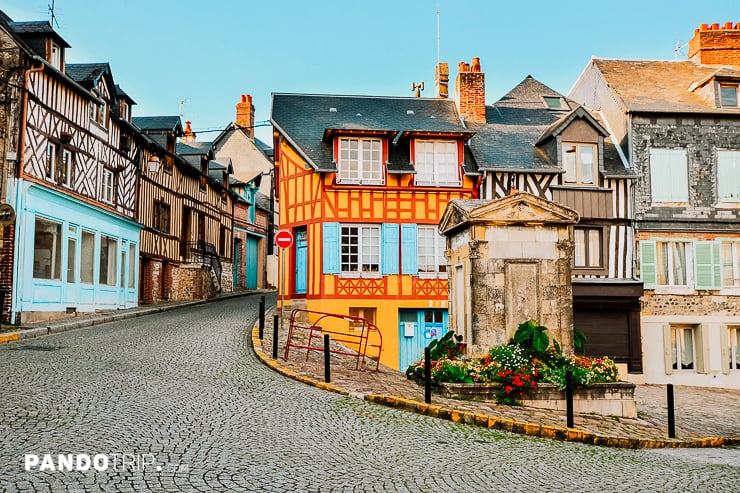
The picturesque coastal town of Honfleur is characterized by its historic harbour, unique church and numerous wooden houses. Honfleur is so charming that people often overlook its original purpose as a trade hub. The harbour was selected for its strategic location on the southern bank of the Seine estuary.
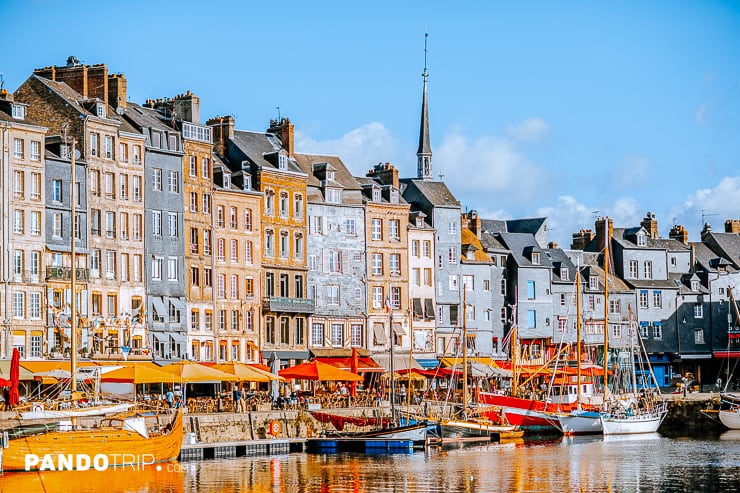
One of Honfleur’s most iconic sites, the Vieux-Bassin (Old Port), is adorned with a colourful array of 16th- and 18th-century townhouses. This picturesque scene has inspired many artists, including famous Impressionists such as Claude Monet and Eugene Boudin. Indeed, Honfleur played a significant role in the Impressionist movement.
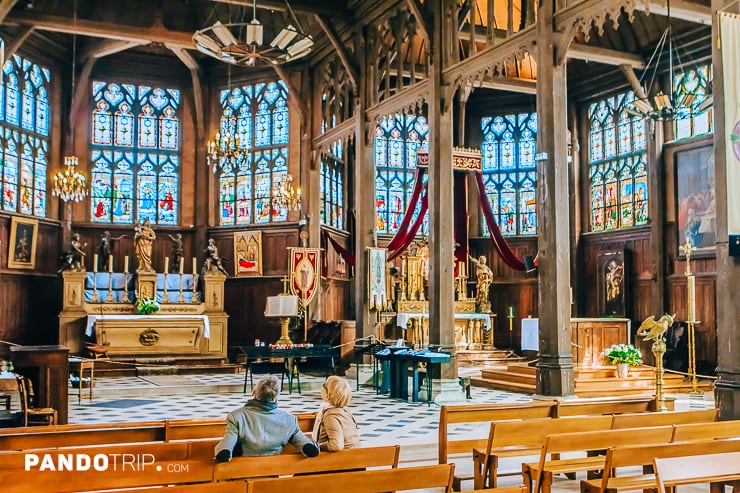
Overlooking the Vieux-Bassin is the Sainte-Catherine church, another notable feature of the town. Constructed by shipbuilders in the late 15th and early 16th centuries, it is one of the largest wooden churches in France.
10. Yvoire, Auvergne-Rhône-Alpes
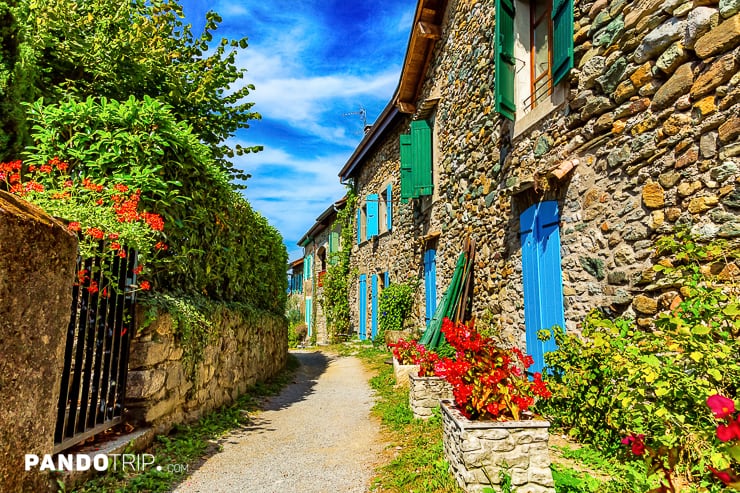
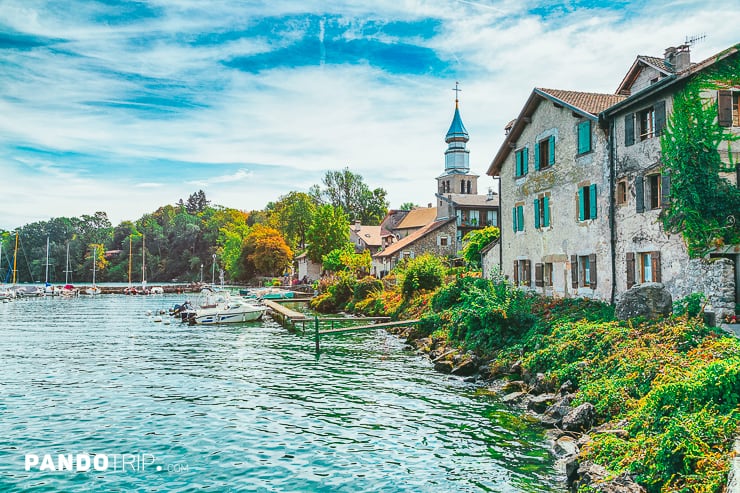
Yvoire, graced by the waters of Lake Geneva, is a medieval village founded in the early 14th century. Located near the Swiss border, it is considered one of the most beautiful villages in France and is locally known as the “Pearl of Lake Geneva”.
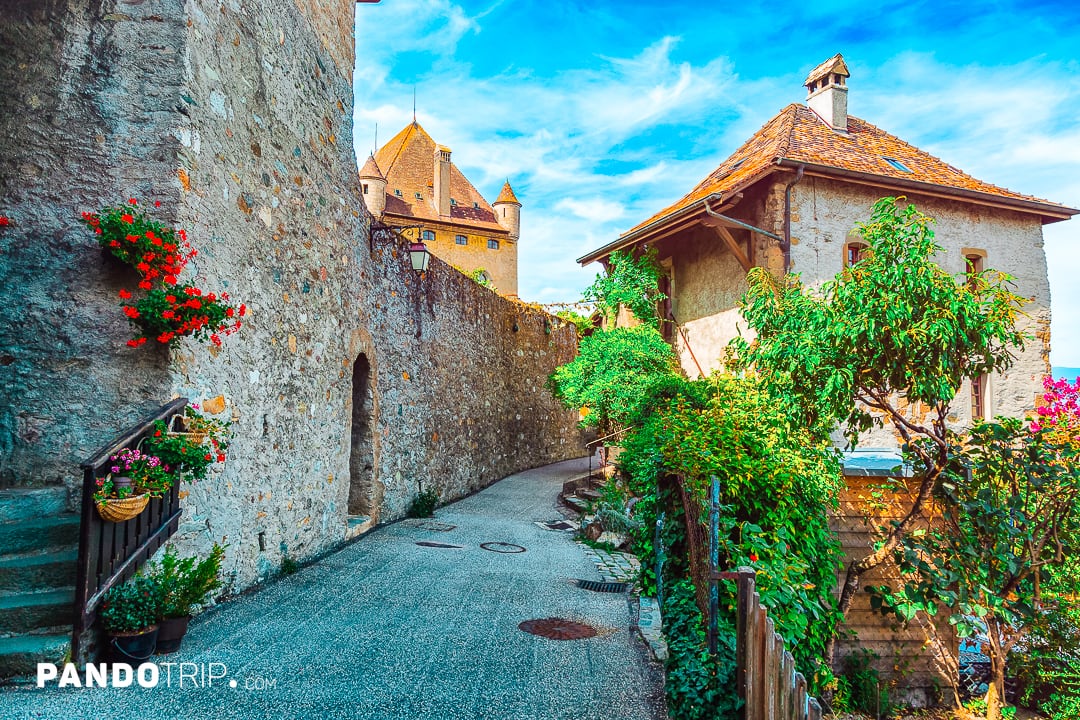
One of the most interesting aspects of Yvoire is its fortifications. The village was strategically fortified in the 14th century by Amadeus V, Count of Savoy, and much of the original defensive structure remains intact.
The village’s medieval character is also evident in its streets. Beautiful stone houses and wooden balconies are stunningly adorned from spring to autumn with geraniums and wisteria. Yvoire is well-known for its floral displays and has received numerous awards for them, including the “four-flower village”, which is given to communities with exceptional floral displays.
The harmony between rich vegetation and the Middle Ages is also vividly showcased in the Garden of the Five Senses. Although it’s not a reconstruction, the Garden of the Five Senses is inspired by medieval times. The space includes a maze, greenery and an extensive collection of 1,500 plant species, each carefully selected to appeal to each of the five senses.

Comments (3)